For a first Gyeongju visit without a car, start by looking for accommodation around Hwangnidan-gil or the downtown bus terminals. Spend your main day in the historic center, then add Bulguksa on a separate morning if you stay overnight. One full day can cover a smaller central route; one night gives you room for an evening at Wolji Pond and a slower departure.
This Gyeongju travel guide starts with the decisions that shape the trip: where to sleep, where you actually arrive, and which sights belong in the same outing. A hotel described simply as “in Gyeongju” might suit a lake holiday much better than a short, walking-focused visit.
Independent guide by KoreaSpot. Visitor information checked on . Area choices and suggested visit lengths are editorial planning recommendations, not timed field tests.
Where to stay in Gyeongju
Think in areas before comparing individual rooms. The city separates its central historic district, Bomun resort area and Bulguksa district in its tourism guide. For this first-visit plan, the following choices make sense:
| Area | Choose it for | The trade-off |
|---|---|---|
| Historic center: Hwangnidan-gil and the downtown bus terminals | Tombs, cafés and dinner in the same part of town. Our first choice for a short visit without a car. | Bulguksa and a rail departure still require separate journeys. Check the actual hotel entrance, not just a neighborhood label. |
| Bomun Lake resort area | A stay built around the lake, resort facilities or a quieter block of leisure time. | Plan transport to and from the central historic sights, especially after an evening visit. |
| Bulguksa area | Putting the temple first and keeping the next morning close to it. | Less convenient for repeated trips back to Hwangnidan-gil. Better when the temple is the main reason for staying. |
For a hanok room, look at the room description as carefully as the exterior photographs. Is the sleeping arrangement a bed or floor bedding? Is the bathroom private, and can you reach it without steps? These details matter more than a traditional roof when someone in your group has difficulty getting up from the floor.
A lake-view hotel can be a good choice when you will spend time at the hotel. For an overnight sightseeing stop, a central base is our default because it reduces the need to return across town for luggage, a rest or dinner. Staying in one place is usually simpler than changing hotels for just two nights.
Arriving by train: the station is a separate destination
Use Gyeongju Station (경주역) at 80 Gyeongjuyeok-ro, Geoncheon-eup for your rail-arrival pin. The address appears in the city’s station and luggage-storage directory. It is outside the downtown sightseeing area. A hotel near Hwangnidan-gil should not be treated as a hotel you can reach with a short walk from your KTX platform.
Check your chosen train in the KORAIL booking service, then plan the local journey to your hotel or first stop separately. Bus travelers should save the terminal printed on their ticket instead. When booking a return trip, work backward from the station or terminal you need, not from the time you finish sightseeing.
Store your bags before the central walk
Ask your accommodation about luggage storage first. Another option in the city directory is Hwangnidan-gil Living Culture Center (황리단길 생활문화센터), 1058-26 Poseok-ro: one use is listed as free, with service hours of 10:00–18:30. Space and bag-size suitability still need checking.
Make collection part of the afternoon plan. Leaving bags at a daytime service and going straight to a late pond visit creates an avoidable problem. Collect them before the storage service closes, even if your train leaves much later.
Getting around: walk the center, ride between districts
The city’s sightseeing-bus guide describes routes 10 and 11 as opposite-direction loops linking central sights, Bomun and Bulguksa. These are useful routes to compare for a temple outing, but the direction matters: the same destination can come much later around the loop. The guide also distinguishes 10-1, which turns back at Gyeongju World instead of reaching Bulguksa.
Search the whole journey from your current stop in your map app before boarding. Use the bus guide to understand the connection, then look at the day’s departures and stop names. Do not use that downtown loop diagram as directions from the rail station.
Within the center, choose a few places to walk between and use a taxi when heat, rain or tired legs make another stretch unappealing. Our South Korea taxi guide covers destination checks and app payments. A rental car is most helpful when your plans extend beyond this compact first-visit route; it is not necessary simply to see the central sights.
Choose what to see in the historic center
Daereungwon, Cheomseongdae and Donggung and Wolji offer different experiences. Start with the tomb landscape, add the observatory as a shorter stop, and keep the pond for the evening if that fits your transport home. Hwangnidan-gil supplies the meal or café break between sightseeing blocks.

Daereungwon and Cheonmachong are not the same ticket
You can walk the Daereungwon grounds without paying to enter Cheonmachong. Choose the separate tomb visit when you want to see inside; choose a shorter grounds visit when your main interest is the landscape. The distinction is easy to miss when an older guide gives one price for the whole complex.
| Place | Admission | What the ticket covers |
|---|---|---|
| Daereungwon grounds | Free | The outdoor tomb-complex grounds. |
| Cheonmachong | KRW 3,000 | A separate visit inside the tomb within Daereungwon. |
| Cheomseongdae | Free | Viewing the stone observatory from its surrounding visitor area. |
| Donggung Palace and Wolji Pond | KRW 3,000 | The palace-and-pond site; not a ticket for the other sights. |
Fees: Gyeongju City admission guide, standard individual adult category, ages 19–64. Reduced-rate and free-entry eligibility are listed separately.
For planning, give Daereungwon about an hour to an hour and a half if you also want Cheonmachong. Allow less when you only want a brief grounds walk. Use the designated paths around the mounds and keep the visit focused on the features that interest you.
Cheomseongdae fits between longer stops
Cheomseongdae is the distinctive stone observatory in the central heritage area. It works well as a short outdoor stop after the tombs or before the pond. You do not need to invent a second full morning around it: use the surrounding walk, take a break, and continue when you are ready.
Plan the pond around your evening, not the last possible ticket
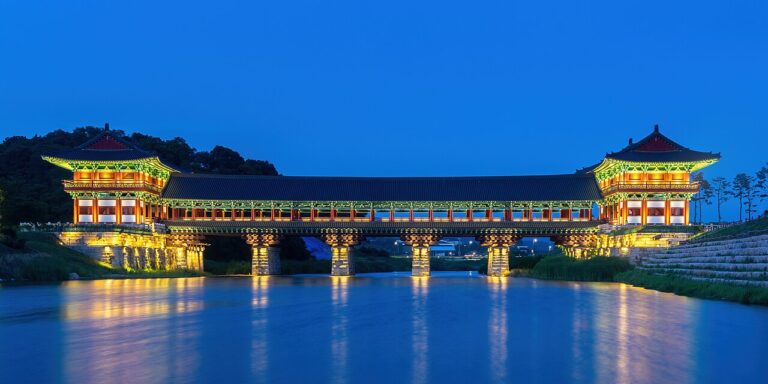
The city’s Donggung and Wolji listing gives 09:00–22:00 opening, with ticket sales ending at 21:30. The site is listed as open year-round. Aim to arrive with enough daylight left to get your bearings, then stay for the illuminated water and buildings as the light changes.
Keep roughly an hour available for a relaxed circuit, with extra time for queues and photographs. On a day trip, decide before dinner whether you can enjoy the evening and still make the journey to your departure station. Staying overnight is often the simplest way to avoid making the pond visit feel rushed.

Use the next morning for Bulguksa or the museum
Bulguksa: choose a separate temple outing
Bulguksa is the stronger choice when you want temple architecture and time outdoors. UNESCO’s listing for Bulguksa and Seokguram recognizes the two sites together, but they are separate stops. Visiting one does not mean you have already visited the other.
The city’s Bulguksa page lists free admission and year-round opening. Inside the temple, look for the contrast between Dabotap and Seokgatap and the stone terraces beneath the wooden halls. Set aside a morning including transport, rather than adding the temple after a full day downtown.
A suggested 90 minutes to two hours on site gives you room for the courts and a slower look at the details. Follow the signed visitor routes around the stone stairs and respect worship taking place in the halls. For a late arrival, contact the temple before traveling: year-round opening does not mean evening access. The city lists 054-746-9913 for visitor enquiries.
Keep Seokguram optional on a short first trip. Add it when you have allowed a separate journey and walking time, not because two places share a World Heritage listing.
Gyeongju National Museum: choose a more compact cultural visit
For an early departure, wet weather or a stronger interest in objects than temple grounds, choose the museum instead. Its visitor page lists standard hours of 10:00–18:00 and free permanent galleries. Separately ticketed special exhibitions can cost extra. Regular closure dates include 1 January, Lunar New Year’s Day and Chuseok day; individual gallery notices are on the museum website.
Allow about 90 minutes to two hours for the galleries that interest you, rather than trying to see every case. Pairing the objects with places you saw the day before gives the visit a purpose. In steady rain, move this indoor visit earlier and shorten the outdoor part of the trip.
A day trip or one night?
One full day: keep the plan in the center
After arriving and storing bags, choose Daereungwon and Cheonmachong, have lunch around Hwangnidan-gil, and continue to Cheomseongdae. Leave the remaining block for either the museum or a longer café break and Wolji in the evening. Your return booking determines whether an after-dark stop is sensible.
Do not add both a temple excursion and every downtown stop simply because they appear in one city guide. With only a late morning arrival and an early evening departure, choose two main visits and a meal.
One night: enjoy the evening and add one substantial morning
Use the first afternoon for the central sights, drop back at your accommodation if needed, and visit Wolji in the evening. On the second day, choose Bulguksa or the museum, then return for lunch, bags and departure. This assumes you have an afternoon on arrival and a usable morning before leaving.
For a two-night stay, spend the extra time on the part you enjoy most: temple architecture, museum collections or a Bomun lakeside break. There is no need to move hotels simply to make the second day look different. For foliage timing and seasonal route choices, use our separate Gyeongju autumn itinerary.
Make Hwangnidan-gil a useful break
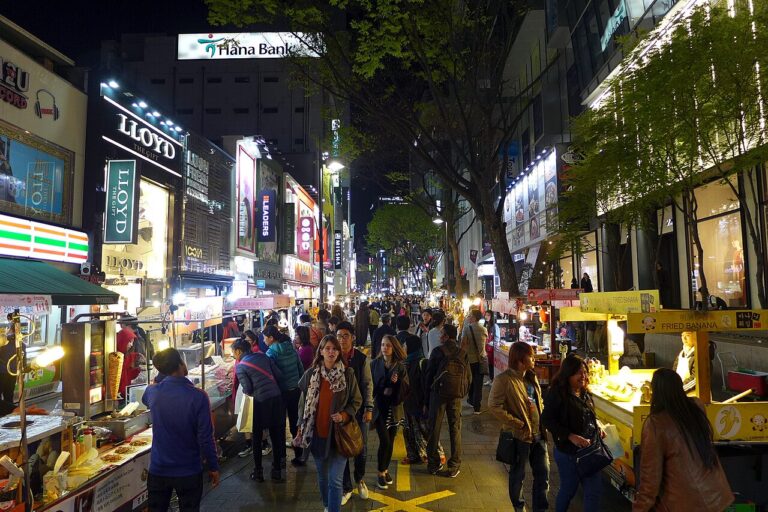
The city’s Hwangnidan-gil guide describes cafés, restaurants and shops spreading from the main street into the surrounding lanes. Treat it as a place to eat and pause, not another attraction with a fixed opening time. Choose a restaurant that suits your appetite and the next part of your route.
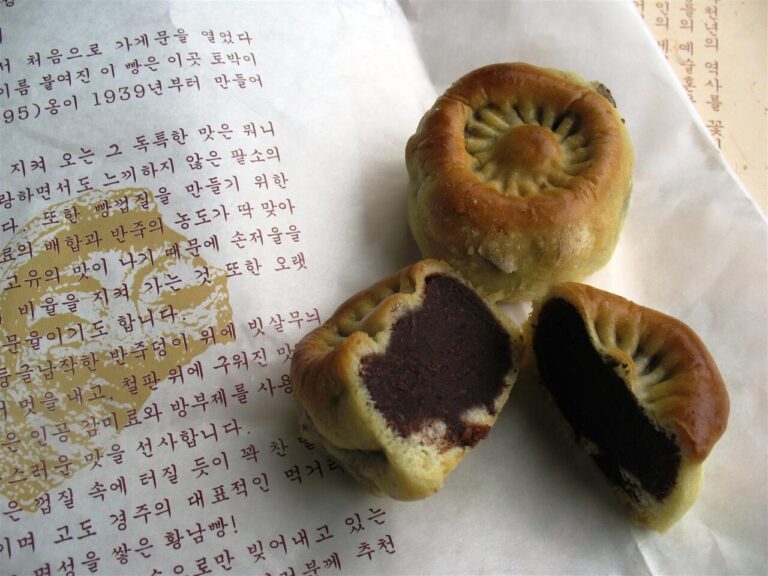
Gyeongju’s local bread guide includes Hwangnam bread, filled with red-bean paste, and chalbori bread, a soft barley-based snack. Trying a small portion makes more sense than buying a gift box before you know which you prefer. Ask about storage life when taking food onward, particularly if it will spend the next day in your luggage.
For a hanok overnight stay, plan breakfast before bed: check whether the room includes it or save a nearby place whose morning hours suit your departure. That small decision leaves more time for the temple or museum than searching for an open café with your bags already packed.
Questions before booking
Where would you stay on a first trip without a car?
Our starting choice is the historic center near Hwangnidan-gil or the downtown bus terminals. Choose Bomun instead when resort time is a priority, or the Bulguksa area when you want the temple to lead the trip. Compare the hotel’s actual location with your evening and departure plans.
Can I see the main sights on foot?
You can make the central tombs, observatory and food streets into a walking-focused visit. Treat Bulguksa, a Bomun hotel and the rail station as separate transport journeys. The practical question is how much walking your group wants between visits, not whether every place can be forced into one route.
Is one night better than a day trip?
One night is our preference when an evening pond visit and a temple morning matter. A day trip still works for a smaller central route. Judge the time you actually have in the city after arrival and before departure, rather than counting the dates on your booking.
Official sources are linked beside the relevant information. The photographs are credited with their original dates; they are not same-day condition reports.
Food, stays and local information
Links open in a new tab. Check current opening hours, availability and visitor notices before making plans.