Gyeongju is easy to remember for tombs and temples, but food is what fills the gaps between them. For a first visit, keep it simple: try Hwangnam bread near the historic center, use Seongdong Market for an everyday market meal, and save Jungang Market for an evening when the night market is operating.
This Gyeongju food guide is not a ranking of “must-eat” restaurants. It is a practical way to decide where to eat, what each market is good for, and how to avoid wasting half a day chasing one famous shop across town.
Independent guide by KoreaSpot. Visitor information checked on September 22, 2026. Individual shop hours, menus and prices can change, so use the linked official tourism pages and the business’s own listing for the day you visit.
A simple food plan for one day in Gyeongju
| Time | Area | Best use |
|---|---|---|
| Late morning | Hwangnidan-gil / historic center | Coffee, a light snack or Hwangnam bread before the long walk |
| Lunch | Seongdong Market | A straightforward local meal with many choices in one place |
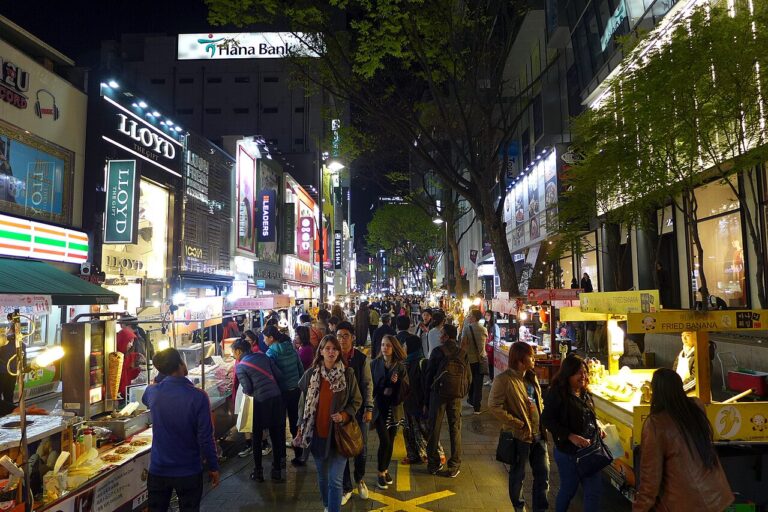
| Evening | Jungang Market | Night-market snacks when the night market is operating |
Do not force all three stops into the same day if your sightseeing route already feels full. One market meal and one snack stop are enough. The point is to make the day easier, not to replace every museum and tomb with another queue for food.
Start with Hwangnam bread, but treat it as a snack
Gyeongju City’s tourism site describes Hwangnam bread (황남빵) as a local pastry that has been made in Hwangnam-dong since 1939. It is filled with red-bean paste and is one of the city’s best-known take-home foods. The city notes that it is easy to find around Daereungwon, the station area and the bus-terminal area.
That makes it useful as a small travel snack rather than something you need to plan a whole detour around. Buy one first if you are unsure whether you like the sweet red-bean filling. If you are taking a box home, ask how long the shop recommends keeping it and whether refrigeration is necessary.

Hwangnam bread and “Gyeongju bread” are not always the same shop
Travelers will see several bakeries using the broader idea of “Gyeongju bread.” Do not assume every shop is the same business or that every box uses the same recipe. If you want the original Hwangnam bread brand described by the city tourism site, use the purchase information on the official Gyeongju shopping guide.
Choose Seongdong Market for an everyday market lunch
Gyeongju’s official English tourism guide describes Seongdong Market as the city’s largest permanent wholesale market. It highlights a street-food section and a Korean buffet area, with foods such as gimbap, tteokbokki, sundae and fried snacks alongside produce, seafood and dry goods.
That variety makes Seongdong Market a sensible lunch stop when a group cannot agree on one restaurant. Walk through first, see what is actually open, then choose. A market meal is easier when you decide whether you want a full sit-down lunch or a few small dishes before ordering anything.

How to order without making the market stressful
- Check whether the price is per item, per plate or by weight.
- Confirm the quantity before paying. Pointing is fine, but quantity matters.
- Ask whether seating is included. Some counters are takeaway-oriented.
- For allergies, show the exact ingredient in Korean. A broad phrase is not enough for a serious allergy.
KoreaSpot’s Korean travel phrases can help with simple ordering, payment and directions. For medical or dietary restrictions, save the precise ingredient name separately.
Use Jungang Market when you specifically want the night-market atmosphere
Gyeongju City lists Jungang Market at 295 Geumseong-ro. The market itself and the night-market stalls are not the same thing. The city’s tourism page currently lists the night market at 18:00–23:00 and publishes different operating patterns by season.
Because the schedule changes seasonally, check the official Jungang Market tourism page before building an evening around it. Do not assume that a photo of illuminated food stalls means the night market operates every night of the year.
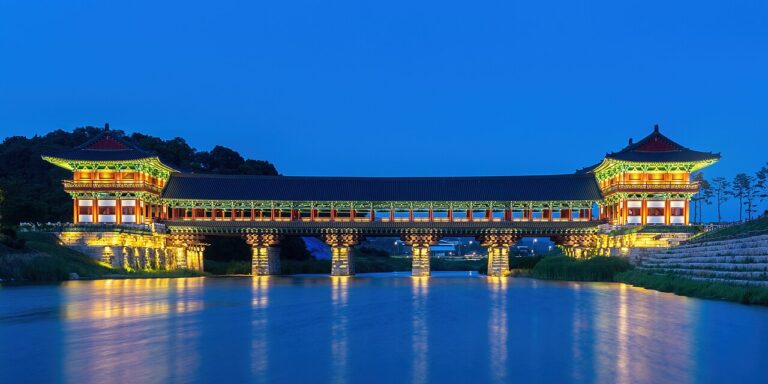
When it is running, treat it as a snack-and-browse stop. If your main evening plan is Donggung and Wolji, eat earlier or keep the market stop short so dinner does not make you rush the attraction’s final admission time.
What about Hwangnidan-gil?
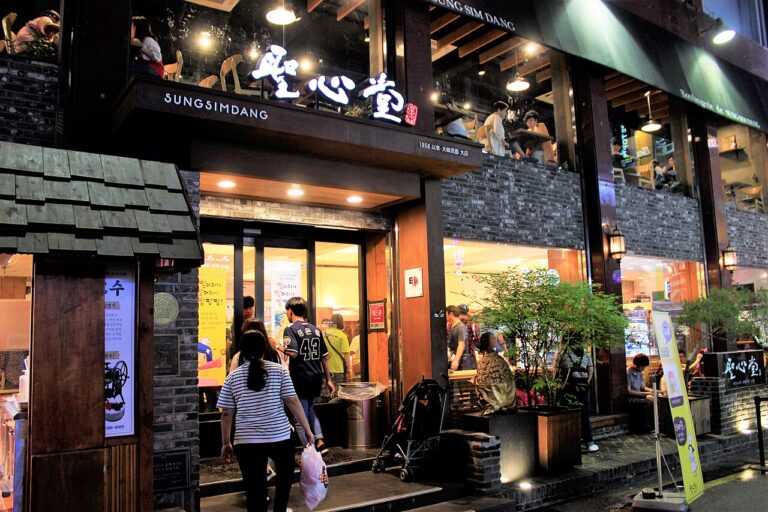
Hwangnidan-gil is an easy place to find cafés, desserts and modern restaurants close to Daereungwon. It is useful when convenience matters more than having a traditional-market experience. The trade-off is simple: popular places can have queues, and the street is already part of many sightseeing routes.
Pick a place because the menu suits your group, not because one queue is longer than another. If you have children, older travelers or someone with dietary restrictions, a comfortable restaurant with a clear menu may be more valuable than spending an hour waiting for a famous snack.
Three foods worth recognizing before you order
Hwangnam bread
A small sweet pastry filled with red-bean paste. It works well as a snack or gift, but it is not a substitute for lunch unless your travel plan has become unusually chaotic.
Gimbap, tteokbokki and market snacks
These are easy to find in Korean markets, including the food areas described by Gyeongju Tourism at Seongdong Market. Choose according to portion size and spice tolerance rather than treating every snack as unique to Gyeongju.
Korean buffet-style market meals
Seongdong Market’s tourism description specifically mentions a Korean Food Buffet Village. Before sitting down, check how the restaurant prices the meal and whether drinks or special dishes are separate. Buffet formats can vary by business.
Match the food stop to the sightseeing route
Daereungwon and Hwangnidan-gil day: keep lunch near the historic center and use Hwangnam bread as a snack.
Station or Eupseong side: Seongdong Market fits naturally when you are already near the central urban area.
Evening with no fixed heritage booking: check whether Jungang Market’s night market is operating and use it as the final food stop.
Bulguksa day: do not cross back into central Gyeongju solely for one snack before finishing the temple visit.
For the actual sightseeing route, see KoreaSpot’s Gyeongju first-visit guide. For illuminated heritage sites, use the Gyeongju at night guide.
Questions travelers ask about eating in Gyeongju
Do I need to visit both Seongdong Market and Jungang Market?
No. Choose Seongdong for a daytime market meal and Jungang when the night market is part of your evening.
Is Hwangnam bread a full meal?
No. It is a sweet red-bean pastry and works better as a snack or take-home food.
Is the Jungang Market night market open every night?
Do not assume so. Gyeongju City publishes seasonal operating patterns. Check the current official tourism page before going.
Should I carry cash?
Cards are common in Korea, but payment methods can vary by individual market stall. Carrying a small amount of cash gives you a backup.
Where should I eat if I only have one day?
Choose the meal stop that sits naturally on your sightseeing route. Spending an hour crossing the city for a famous snack is rarely a good trade when your visit is short.
Official pages worth saving
- Gyeongju City Tourism
- Gyeongju City English guide: Seongdong Market and local food
- Gyeongju City: traditional markets
- Gyeongju City: Hwangnam bread and local shopping
Keep the food plan proportional to the trip: one good meal, one snack and enough time left to see the city you came for.
Food, stays and local information
Links open in a new tab. Check current opening hours, availability and visitor notices before making plans.